In an era where our smartphones are essentially digital extensions of our physical selves, a broken screen or a failing battery can feel like a genuine crisis. The demand for mobile device maintenance has given rise to a specialized industry, but not all fixes are created equal. Achieving a “perfect” cellphone repair—one that restores the device to its original factory standards. Requires more than just a screwdriver and a replacement part. It is a delicate blend of technical expertise, high-quality components, and a surgical-grade environment.
For the modern consumer, understanding what differentiates a mediocre patch-up from a professional-grade restoration is essential. This article explores the intricate world of mobile device repair. Focusing on the standards, tools, and methodologies required to achieve perfection.
The Anatomy of a High-Quality Repair
A cellphone is a marvel of micro-engineering. Within its slim chassis lies a complex ecosystem of logic boards, flex cables, and sensitive sensors. The first step toward a perfect repair is a comprehensive diagnostic. Before any screws are removed, a professional technician must verify the functionality of all secondary systems. Such as the haptic engine, ambient light sensors, and biometric scanners (FaceID or Fingerprint sensors).
The “perfect” repair is invisible. It means that once the device is closed, there are no gaps in the frame, the display is perfectly flush, and the software does not trigger “unknown part” warnings. Achieving this level of excellence requires a deep understanding of the device’s internal architecture.
The Role of Premium Parts and Component Sourcing
One of the most significant hurdles in the repair industry is the quality of replacement parts. The market is flooded with “Grade B” or “Aftermarket” screens and batteries that, while functional, often lack the color accuracy, brightness, and longevity of the original equipment.
To achieve a perfect repair, one must prioritize:
- Original Equipment Manufacturer (OEM) Parts: These are components made by the same factories that supply the phone brands. Using OEM parts ensures that the touch sensitivity and power consumption remain identical to a new device.
- Adhesive Restoration: Most modern phones are water-resistant. This resistance is provided by a specific chemical adhesive gasket. A perfect repair involves completely removing the old adhesive and applying a new, laser-cut waterproof seal to maintain the device’s IP rating.
- Battery Calibration: Replacing a battery is more than just a physical swap. Perfectionists use software tools to reset the cycle count and ensure the device’s power management system recognizes the new cell correctly.
Precision Tools: The Technician’s Arsenal
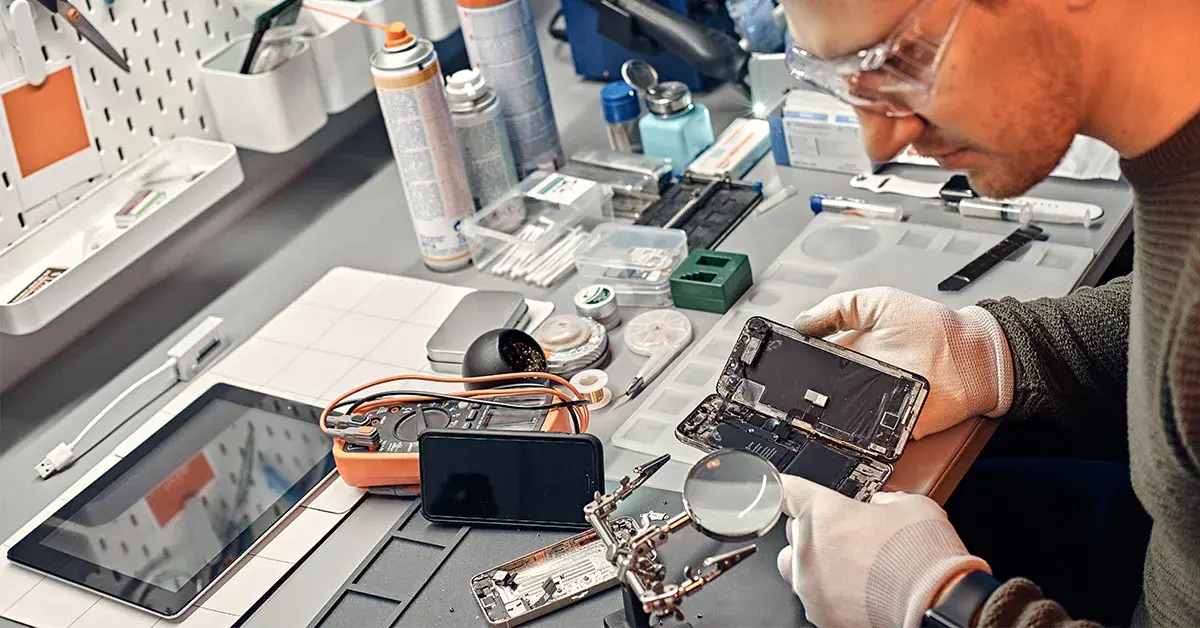
A craftsman is only as good as their tools. Attempting a repair with generic, oversized instruments is a recipe for stripped screws and damaged ribbon cables. The perfect repair environment resembles a laboratory more than a traditional workshop.
The essential toolkit for a perfect repair includes:
- Anti-Static Precautions: Electrostatic Discharge (ESD) can kill a logic board instantly. A perfect repair is always conducted on an ESD-safe mat with the technician wearing a grounded wrist strap.
- Calibrated Torque Drivers: Modern smartphones use screws of varying lengths and widths. Using a torque-limited driver ensures that screws are tightened exactly to specification without cracking the delicate layers of the motherboard.
- Digital Microscopes: With components becoming smaller every year, a microscope is necessary to inspect solder joints and ensure that no microscopic debris is left inside the device before sealing.
The Importance of Software Integration
In the current landscape, hardware repair is only half the battle. Manufacturers have increasingly moved toward “part pairing,” where individual components are digitally locked to the motherboard.
A perfect repair involves “Serialization.” For example, when replacing a screen on a modern flagship, the technician must often transfer the data from the old screen’s IC chip to the new one to preserve features like “True Tone” or auto-brightness. Without this digital transfer, the repair—no matter how physically perfect—remains incomplete. Professional repairers use specialized programmers to sync these components, ensuring the software and hardware work in perfect harmony.
Cleanliness and the “Zero-Dust” Standard
One of the most common flaws in amateur repairs is the presence of dust or fingerprints under the camera lens or the display. In a professional setting, the “Zero-Dust” standard is non-negotiable. Technicians often use “Clean Benches” or ionized air blowers to create a localized environment free of airborne particles. This ensures that when the device is returned to the customer, the front and rear cameras are as clear as the day the phone was unboxed.
The Final Quality Assurance (QA)
A repair is not finished until it has passed a rigorous multi-point inspection. This includes testing the wireless charging coils, checking signal strength (to ensure antennas were reconnected properly), and performing a “stress test” on the battery. A perfect repair comes with a guarantee that the device will not just work today, but will continue to perform for years to come.
Conclusion
Achieving a perfect cellphone repair is an exacting process that demands patience, the right equipment, and an uncompromising commitment to quality. While it may be tempting to opt for the cheapest fix available, the intricate nature of modern smartphones means that shortcuts often lead to more expensive problems down the line. By focusing on OEM-grade parts, specialized tools, and proper digital calibration, we can extend the life of our technology and reduce electronic waste. A perfect repair doesn’t just fix a screen; it restores the trust between the user and their most essential tool.